

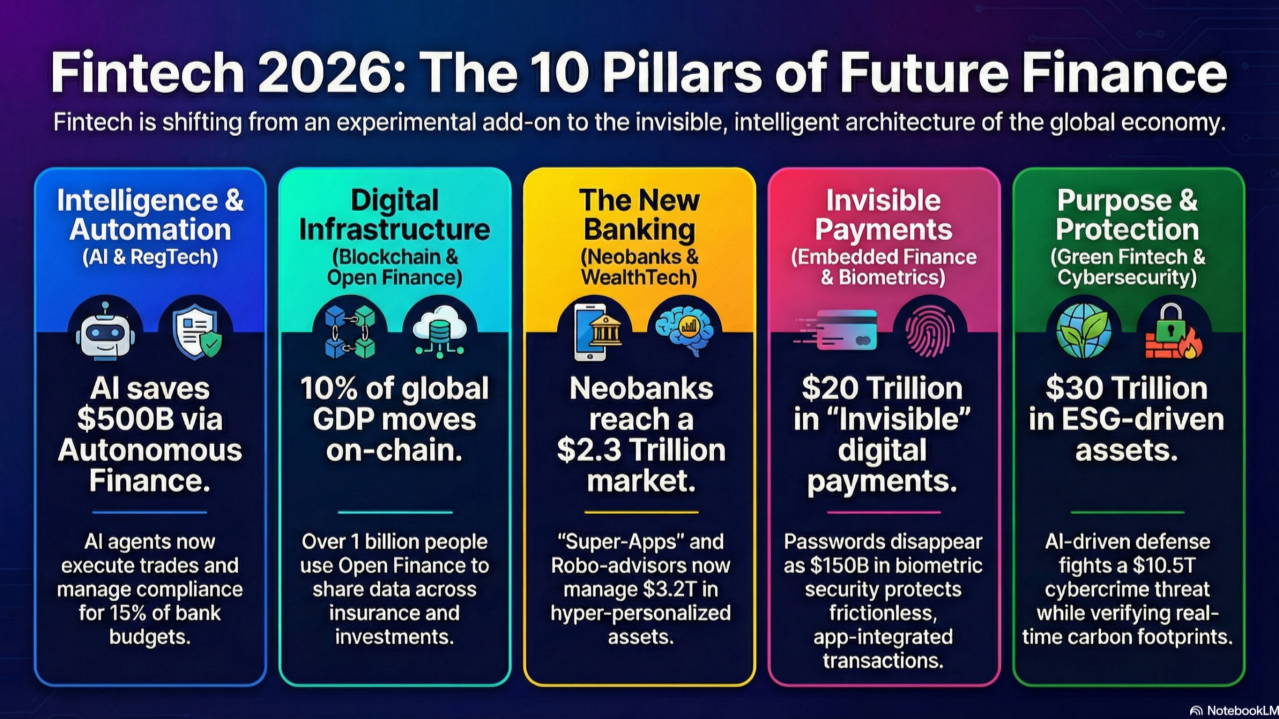
The landscape of financial education in the United States has undergone a tectonic shift. As we navigate 2026, the traditional boundaries between “finance” and “technology” have effectively dissolved. Today, a student pursuing a Master of Finance at NYU or Wharton is as likely to be found debugging a Python script for algorithmic trading as they are analyzing a balance sheet. This convergence—FinTech in the classroom—is not merely a trend; it is the new pedagogical standard required to meet the demands of a $10 trillion global FinTech market.
The integration of high-level digital tools has redefined academic rigor. According to recent 2025-2026 educational benchmarks, over 85% of top-tier US business schools have now integrated mandatory modules on blockchain verified accounting and AI-driven risk assessment. This shift ensures that graduates are not just numerically literate but computationally fluent, capable of navigating a fiscal world governed by instant data and decentralized protocols.
However, this rapid evolution has created a significant “skills gap” within the student body. As curriculums pivot toward high-frequency trading simulations and neural network modeling, many students find themselves requiring specialized support to maintain their GPA. To bridge this gap, many high-distinction candidates now collaborate with assignment writers online to master the technical nuances of these hybrid subjects. This collaborative approach allows students to focus on strategic financial theory while ensuring their technical documentation meets the stringent 2026 TEQSA-aligned and US academic standards.
The Digital Pillars of Modern Finance Studies
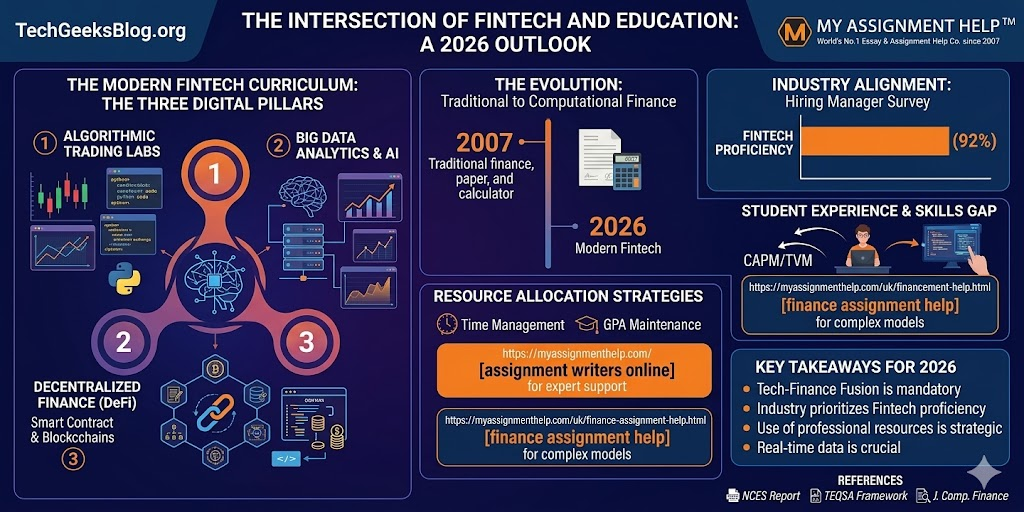
The 2026 finance curriculum is built upon three primary technological pillars:
- Algorithmic and High-Frequency Trading (HFT): Modern labs now use real-time data feeds from the NYSE and NASDAQ, requiring students to write execution algorithms that account for micro-second latency.
- Predictive Analytics & Big Data: The use of SAS and SPSS has been largely superseded by custom-built R and Python libraries designed to predict market volatility using sentiment analysis from social media and news aggregates.
- Decentralized Finance (DeFi) and Smart Contracts: Understanding Ethereum’s Solidity or Bitcoin’s Layer 2 solutions is now foundational for any course touching on corporate treasury management or international trade finance.
Data-Driven Insights: The 2026 Student Experience
Recent data from the National Center for Education Statistics (NCES) suggests a 40% increase in enrollment for “Computational Finance” degrees compared to traditional “General Finance” tracks. Furthermore, a 2026 survey of US-based hiring managers in the banking sector revealed that 92% of recruiters prioritize candidates who can demonstrate proficiency in FinTech-specific software over those with purely theoretical knowledge.
For many, the complexity of these requirements is overwhelming. Whether it is calculating the Greeks in option pricing via automated scripts or auditing a smart contract, the demand for finance assignment help has surged among domestic and international students in the USA. This assistance isn’t just about completing a task; it’s about understanding the underlying logic of the “Code-to-Cash” pipeline that now defines the industry.
Key Takeaways
- Tech-Finance Fusion: 2026 marks the year where computational skills became mandatory for US finance degrees.
- Industry Alignment: Recruitment is now heavily biased toward students who can navigate AI and Blockchain environments.
- Resource Management: Utilizing professional academic resources is a strategic move to manage the increased technical workload of modern syllabi.
- Data over Theory: Real-time market simulations have replaced static case studies in top-tier institutions.
Understanding the 2026 FinTech Educational Model
To excel in this environment, students must move beyond the “calculator” era. The current pedagogical framework focuses on Heuristic Learning, where students use AI agents to simulate market crashes and then defend their recovery strategies. This level of practical application requires a deep dive into “Quantitative Methods,” a subject area that consistently ranks as the most difficult for the 2026 cohort.
By integrating these digital tools, universities are effectively turning classrooms into incubators. However, the pressure to perform in these high-stakes environments has led to a more pragmatic view of academic assistance. Professional guidance is no longer a “last resort” but a tactical component of a successful student’s toolkit, ensuring that their submissions reflect the professional-grade technicality expected by modern professors.
Frequently Asked Questions (FAQs)
Q1: What are the most important programming languages for finance students in 2026?
Python remains the industry leader due to its vast library support (Pandas, NumPy), followed by SQL for database management and Solidity for DeFi-focused roles.
Q2: Is traditional finance theory still relevant?
Absolutely. While the delivery of finance has changed, the core principles of Time Value of Money (TVM), Diversification, and Capital Asset Pricing Model (CAPM) remain the bedrock upon which all FinTech is built.
Q3: How do digital tools improve academic transparency?
Tools like Blockchain-verified credentials and AI-driven plagiarism checkers (like Turnitin’s 2026 suite) ensure that academic integrity is maintained while allowing for complex, data-rich submissions.
Q4: Where can I find help with complex finance simulations?
Specialized platforms offering expert academic support provide targeted assistance for students struggling with the coding and mathematical modeling aspects of modern finance.
Author Bio
Dr. Sarah Mitchell Senior Content Strategist & Academic Consultant at MyAssignmentHelp Dr. Mitchell holds a PhD in Quantitative Finance from Georgia Tech and has over 12 years of experience in the US higher education sector. She currently leads the content strategy team at MyAssignmentHelp, focusing on bridging the gap between emerging FinTech trends and student academic performance. Her work has been featured in several leading ed-tech journals and finance summits across North America.
References
- National Center for Education Statistics (NCES), 2026 Report on Emerging Degree Trends.
- Global FinTech Market Outlook, 2025-2030.
- TEQSA Higher Education Standards Framework (2026 Update).
- The Journal of Computational Finance: “The Evolution of Academic Syllabi in the AI Era.”
