

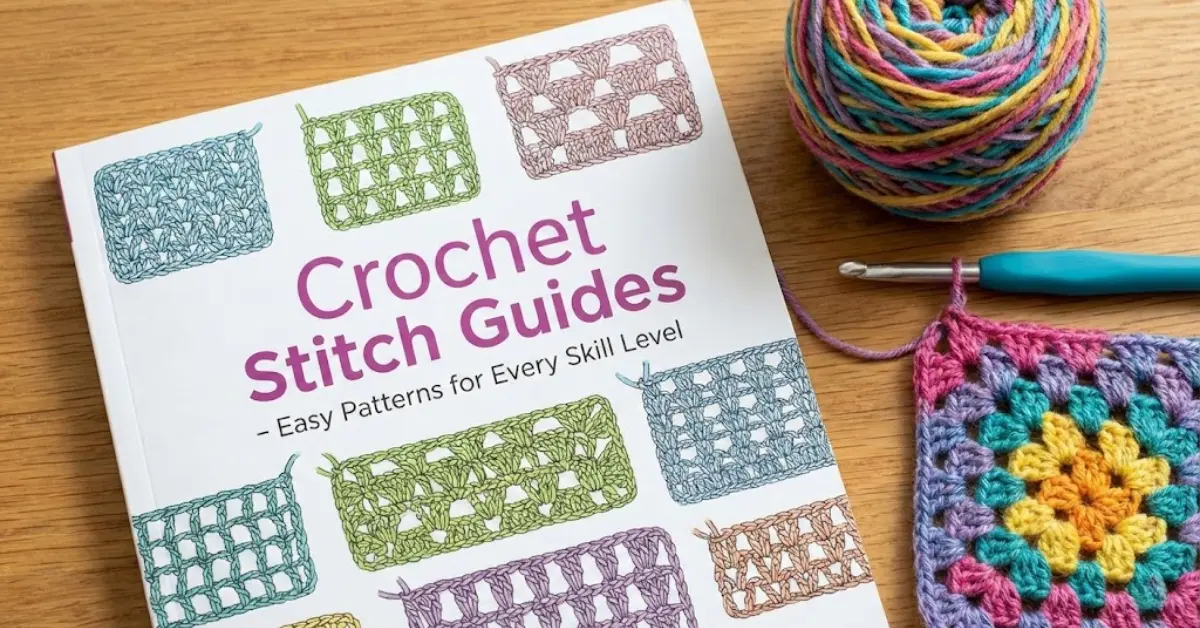
Introduction to Crochet Stitch Guides
If you’ve ever picked up a crochet hook, you know the thrill of turning a simple strand of yarn into something beautiful. But let’s be honest – it can also feel overwhelming when you’re staring at dozens of different stitches and patterns. That’s where Crochet Stitch Guides come in. These guides are essentially your roadmap, showing you how each stitch is made, when to use it, and how it can transform your projects.
For beginners, stitch guides are a lifesaver. They break down complicated techniques into simple, step-by-step instructions so you don’t end up tangled in frustration. Even something as basic as a chain stitch or single crochet suddenly makes sense when you can follow a clear visual or written guide.
For advanced crocheters, stitch guides are equally valuable. They’re not just for learning new stitches – they inspire creativity, helping you experiment with textures, patterns, and combinations you might not have tried otherwise. Think of them as a reference library at your fingertips, ready to elevate your projects from ordinary to extraordinary.
So whether you’re just starting your crochet journey or looking to refine your skills, having a reliable Crochet Stitch Guide can save time, boost confidence, and make the process far more enjoyable.
Reflective Question: When was the last time a stitch guide helped you solve a tricky pattern or spark a new idea for a project?
Table of Contents
Essential Tools and Materials
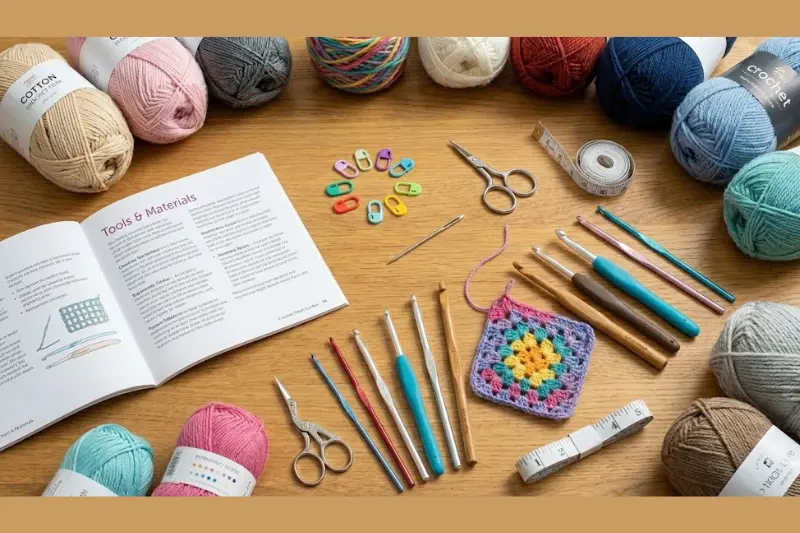
Before you dive into stitches, it’s worth taking a moment to talk about the tools and materials that make crochet enjoyable and effective. Choosing the right items isn’t just about comfort – it directly affects how your stitches look, feel, and hold together.
Crochet Hooks
Hooks come in all shapes, sizes, and materials – from lightweight aluminum to smooth bamboo or ergonomic plastic. Beginners often start with a medium-size hook, like a 5mm, which works well with standard worsted-weight yarn. Experienced crocheters might experiment with larger hooks for airy patterns or smaller hooks for fine, detailed work. The right hook ensures your stitches are even, prevents hand strain, and makes your project more enjoyable.
Yarn Types
Not all yarns are created equal. Wool, cotton, acrylic, and blends all behave differently. Cotton, for example, gives crisp stitches that show off patterns beautifully, while acrylic can be softer and more forgiving for beginners. Think of yarn as your canvas – the choice of color, texture, and thickness can completely change the look and feel of your project.
Accessories
Other essentials include stitch markers, scissors, tapestry needles, and even a row counter if you like keeping track. These might seem minor, but they save time, reduce mistakes, and make complicated stitches much more manageable.
Why it Matters
Using the right combination of hook, yarn, and accessories affects your tension, stitch definition, and overall finished look. Even a simple single crochet can appear tight and messy or loose and sloppy if the materials aren’t a good match. Taking a little time to choose wisely sets you up for success and makes your Crochet Stitch Guides easier to follow.
Mini Tip: If you’re unsure, start with a medium-weight yarn and a standard hook. It’s the “comfort zone” combination for learning most stitches without frustration.
May be you like it:
Top Jobs for Women in Tech – Careers That Empower
AI Tools for Lit Review – Streamline Your Research Fast
The Teacher’s Guide – Tips, Tools & Strategies for Success
Software Testing Review – Tools, Tips & Best Practices
Basic Crochet Stitches for Beginners
Once you’ve got your tools and yarn ready, it’s time to dive into the heart of crochet: the stitches themselves. Learning the foundational stitches is like learning the alphabet – once you know them, you can create endless “sentences” and “stories” with your projects. A reliable Crochet Stitch Guide is invaluable here, helping you understand not just how to make each stitch, but also why and when to use it.
Chain Stitch (ch)
The chain stitch is the building block of almost every crochet project. Think of it as laying the foundation for a house – without a good base, nothing else will hold together. Beginners often practice making long chains to get consistent tension, which is key for all future stitches. A fun mini-project: try making a simple chain bracelet or a bookmark to practice your tension and smooth loops.
Single Crochet (sc)
Single crochet is compact and tight, creating a neat and dense fabric. It’s perfect for items like dishcloths, potholders, or small stuffed toys. A practical exercise is to crochet a small square, practicing counting stitches across each row – it helps build precision and control, which are crucial for more complex patterns later.
Double Crochet (dc)
Double crochet is taller than single crochet, which means you cover more area faster and can create looser, drapier fabrics. It’s great for scarves, blankets, or even summer tops. For a mini-project, try making a simple striped scarf by alternating yarn colors every few rows – you’ll get comfortable with the rhythm of double crochet and see how stitch height affects texture.
Practical Insight: Don’t rush through these basics. Even experienced crocheters revisit them to perfect tension, consistency, and stitch clarity. Your first attempts might be uneven, but that’s part of the learning process – each stitch teaches you control, patience, and technique.
Reflective Question: Which of these basic stitches feels the most natural to you, and which one do you want to practice more to build confidence?
Intermediate Stitches to Expand Your Skills
Once you’re comfortable with the basics, it’s time to take your crochet to the next level. Intermediate stitches add texture, movement, and visual interest to your projects – and a good Crochet Stitch Guide helps you navigate them with confidence. These stitches open up new possibilities, from decorative blankets to intricate garments.
Half Double Crochet (hdc)
The half double crochet sits between a single and double crochet in height. It creates a fabric that’s slightly taller than single crochet but denser than double crochet, making it perfect for hats, scarves, and sweaters. A practical tip: try combining rows of half double crochet with single crochet to create subtle texture variations in your projects.
Treble Crochet (tr)
Treble crochet is taller and airier, ideal for creating lace-like patterns or light, flowing fabrics. If you’re working on a shawl or an airy blanket, this stitch allows your project to have a delicate drape without sacrificing structure. Mini-project idea: a simple lace scarf using only treble crochet and chain spaces – it’s a small win that boosts confidence with taller stitches.
Cluster Stitches
Cluster stitches group multiple stitches together at the top to create a raised texture. They’re great for adding dimension to blankets, pillows, or decorative items. Practicing clusters helps you learn how to maintain consistent tension while working multiple stitches into one space.
Shell Stitches
Shell stitches fan out to form scalloped, decorative edges or repeating patterns. They’re versatile and can add a professional-looking touch to blankets, borders, or accessories. Try combining shells with single or double crochet in alternating rows – you’ll instantly notice how textures pop and patterns emerge.
Tips for Combining Stitches:
- Mix different stitch heights (like single with double crochet) to create subtle waves or textures.
- Use clusters and shells strategically to highlight sections of a project.
- Experiment in small swatches before committing to a large piece – it saves frustration and helps you visualize patterns.
Reflective Insight: Intermediate stitches aren’t just about complexity; they’re about creative expression. Each new stitch you master gives you another tool to shape the look, feel, and personality of your project.
Mini Question for You: Which intermediate stitch excites you the most to try, and how might you use it in your next project?
Advanced Stitches and Techniques
Once you’ve mastered both basic and intermediate stitches, you might feel ready to tackle more challenging patterns. Advanced stitches not only make your projects stand out but also give you the satisfaction of creating something truly intricate. With a solid Crochet Stitch Guide, even complex stitches become approachable – it’s all about breaking them down step by step.
Post Stitches
Post stitches are worked around the post of a stitch from a previous row instead of into the top loops. This technique creates raised textures, like cables or ribbing, and is perfect for hats, sweaters, and textured blankets. A mini exercise: try a few rows of front post and back post double crochet – it’s like giving your crochet a 3D effect.
Bobbles and Popcorn Stitches
These stitches form small, rounded clusters that “pop” off the fabric. They add playful texture to blankets, scarves, or decorative pieces. Practicing bobbles helps you control tension and stitch placement, which is essential for more intricate designs.
Lace and Openwork Patterns
Lace crochet uses chains and taller stitches to create airy, delicate fabrics. Ideal for shawls, table runners, and lightweight garments, lace patterns can look intimidating at first. But following a clear stitch guide allows you to track chains, spaces, and stitch counts – turning a seemingly complicated project into a step-by-step process.
Combining Advanced Techniques
Advanced stitches are often most effective when mixed with basics and intermediates. For example, you might alternate shell stitches with bobbles for a textured blanket, or add post stitches along lace edges to create structure. The key is experimentation, guided by a reliable Crochet Stitch Guide, so you can see how different stitches interact and complement each other.
Practical Insight: Complex stitches might feel intimidating, but they’re really just a combination of techniques you already know. Treat each row as a mini-project, keep your stitch guide handy, and don’t hesitate to practice on swatches first.
Reflective Question: What’s the most ambitious crochet project you’ve wanted to try, and which advanced stitch could make it even more special?
May be you like it:
How to Write a Winning Resume for Lab Tech Roles
AI Rap Name Generator – Create Your Unique Stage Name
How to Tour Guide – Skills, Tips & Secrets for Great Tours
Top Software Therapy Reviews – Find the Best Tools Today
Reading and Using Crochet Patterns
Even with a solid grasp of stitches, following a crochet pattern can feel like learning a new language. Patterns are packed with abbreviations, diagrams, and charts, and without guidance, it’s easy to get lost. This is where a Crochet Stitch Guide becomes indispensable – it helps you decode patterns quickly and confidently.
Understanding Abbreviations
Patterns are full of shorthand: sc for single crochet, dc for double crochet, ch for chain, and so on. At first, it can feel like reading hieroglyphics, but keeping a guide or a reference chart nearby makes it much easier. Even experienced crocheters refer back to abbreviations when working on complex projects – it’s totally normal!
Reading Diagrams and Charts
Visual learners especially benefit from charts. A diagram shows stitches as symbols arranged in the order they’re worked, which can be easier to follow than written instructions. With a stitch guide explaining each symbol, you’ll be able to read patterns like a map, seeing exactly where each stitch goes.
How Guides Help You Decode Patterns
A good guide often includes step-by-step instructions, pictures, and sometimes even short videos. These resources help you:
- Recognize stitches at a glance.
- Understand stitch placement and direction.
- Avoid mistakes that can unravel hours of work.
Mini Example: You might encounter a pattern that calls for a “bobble cluster shell.” Without guidance, that sounds intimidating. But by referencing your Crochet Stitch Guide, you can break it down: make the bobble, group it into a cluster, then fan it out into a shell. Suddenly, it’s manageable and even fun.
Reflective Question: Have you ever abandoned a project because the pattern felt confusing? How could a good stitch guide have helped you finish it confidently?
Tips for Practicing and Mastering Stitches
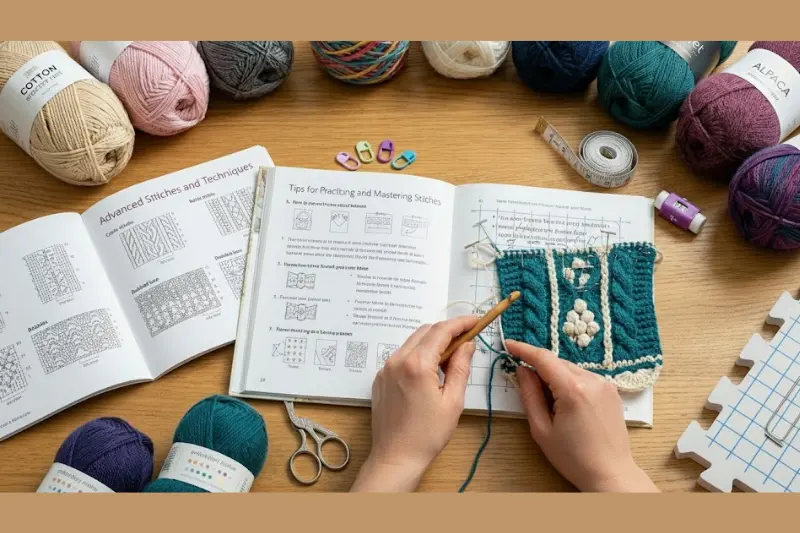
Learning crochet is one thing – mastering it is another. Even after you know the basic, intermediate, and advanced stitches, developing consistency, speed, and confidence takes practice. A Crochet Stitch Guide can serve as both a roadmap and a mentor, helping you refine your technique without unnecessary frustration.
Swatching
Before starting a big project, make a small “swatch” of your stitches. It doesn’t have to be fancy – just a 4×4 inch square of the stitch or combination you plan to use. Swatching helps you:
- Check your tension.
- See how the stitches behave with your chosen yarn and hook.
- Identify any areas where you might get uneven loops.
Repetition
Repetition is the secret to muscle memory. Crocheting the same stitch multiple times helps your hands “remember” the motion, which reduces mistakes and increases speed over time. Even 10–15 minutes of focused practice a day can make a huge difference.
Keeping a Crochet Journal
Document your progress. Write down stitch counts, hook and yarn choices, or notes about what worked and what didn’t. Over time, this journal becomes a personalized reference that makes tackling new projects much easier.
Avoiding Common Mistakes
Some of the most common beginner pitfalls include:
- Skipping stitches accidentally.
- Inconsistent tension, leading to uneven fabric.
- Losing track of rows in complex patterns.
A Crochet Stitch Guide helps prevent these mistakes by showing correct stitch placement, offering visual cues, and providing reminders for tricky sections.
Mini Insight: Everyone struggles at first. Even expert crocheters make errors, but consistent practice combined with a good guide turns frustration into progress. Think of each “mistake” as a lesson that makes your next project smoother.
Reflective Question: Which technique – swatching, repetition, or journaling – could you start today to level up your crochet skills?
Creative Applications of Stitches
One of the most rewarding parts of crochet is seeing your stitches come to life in real projects. Once you’re comfortable with a range of techniques from your Crochet Stitch Guide, the possibilities are endless – from cozy blankets to quirky amigurumi toys, every stitch can add personality and texture.
Blankets and Throws
Blankets are a fantastic canvas for experimenting with stitch combinations. Mixing single crochet with shells or clusters can create textured stripes or raised patterns that feel as good as they look. A mini tip: alternate rows of different stitches to give a simple blanket a dynamic, handcrafted look without overwhelming yourself.
Scarves and Hats
Accessories like scarves and hats are perfect for practicing intermediate stitches. For example, using half double crochet and treble crochet in the same scarf can produce subtle waves, while shell stitches on a hat brim add a decorative flourish. These small projects let you experiment without committing to a large piece.
Amigurumi and Toys
For stuffed animals or toys, precision is key. Stitches like single crochet and bobbles are common because they hold shape well. By carefully combining stitches, you can add dimension – think raised textures for a bear’s snout or shells for decorative wings.
Home Décor
From cushion covers to table runners, crochet stitches can transform a room. Cluster and shell stitches, lace patterns, and textured stitches can all be combined to create visually stunning pieces that reflect your style.
Practical Insight: Don’t be afraid to mix and match stitches. A project with multiple stitch types often looks more complex and interesting than it actually is. Swatches or small experiments can help you see how textures interact before committing to a full piece.
Reflective Question: Which project would you love to try next – a textured blanket, a lace scarf, or a cute amigurumi? How could combining different stitches make it unique?
Reflective and Troubleshooting Questions
Crochet isn’t just about following instructions – it’s also about reflection and learning from your own projects. A Crochet Stitch Guide is invaluable not only for teaching new stitches but also for helping you troubleshoot and improve. Taking a moment to reflect on your work can dramatically speed up your growth as a crocheter.
Self-Checks
Ask yourself questions like:
- Which stitches do I enjoy the most, and why?
- Are there stitches I tend to avoid, and what makes them challenging?
- How does my tension vary across different projects?
Answering these questions gives insight into your strengths and areas to focus on. For instance, if you love clusters but struggle with lace, you might dedicate a week to practicing lace patterns on small swatches.
Troubleshooting Common Problems
Even experienced crocheters encounter issues:
- Uneven tension leading to wobbly rows.
- Stitches that don’t line up correctly.
- Miscounted rows or skipped stitches.
A detailed stitch guide can help you correct these problems. For example, guides often include visual cues or tips for counting stitches accurately, adjusting tension, or fixing mistakes without unraveling hours of work.
Mini Insight: Every mistake is an opportunity to learn. Instead of getting frustrated, refer back to your guide, examine the stitch structure, and try again. Over time, these small corrections become second nature.
Reflective Question: When you hit a tricky stitch or pattern, do you pause and troubleshoot, or do you push through? How could using a stitch guide make the process smoother and more satisfying?
FAQs
What is a crochet stitch guide?
A crochet stitch guide is a reference that explains how to make stitches step by step, often with diagrams, tips, and examples for beginners and advanced crocheters.
Who can use crochet stitch guides?
Anyone can use them – from beginners learning the basics to experienced crocheters exploring advanced textures and patterns.
How do crochet stitch guides help improve skills?
They provide clear instructions, visual cues, and troubleshooting tips, helping you practice efficiently and build confidence in your projects.
Can I combine different stitches from a guide?
Absolutely! Guides encourage experimenting with stitches to create unique textures, patterns, and creative designs.
Are crochet stitch guides available in different formats?
Yes – guides can be books, PDFs, videos, charts, or online tutorials, making it easy to choose a format that suits your learning style.
Conclusion
Crochet is more than just a hobby – it’s a form of creative expression, patience, and even mindfulness. By now, you’ve seen how Crochet Stitch Guides can take you from the basics to advanced techniques, helping you build skills, confidence, and a library of stitches to experiment with.
The key takeaway? Don’t be afraid to play. Mix stitches, try new textures, and explore patterns that challenge you. Even small experiments – like combining shells with clusters or adding a lace border to a scarf – can teach you something valuable about tension, stitch placement, and design.
A good stitch guide is your best companion on this journey. It helps you:
- Learn new stitches efficiently.
- Troubleshoot mistakes without frustration.
- Visualize how stitches interact for creative applications.
Mini Encouragement: Pick one stitch you’ve learned recently and try it in a small project today. It could be a tiny swatch, a coaster, or even a decorative edge on an existing piece. Every little experiment builds confidence and hones your skills.
Reflective Question: Which new stitch or technique will you explore first, and how might it transform your next project?
Remember, crochet is as much about enjoying the process as it is about finishing the project. With a solid guide, patience, and curiosity, the possibilities are endless.
May be you like it:
Armour Tech Pavers – Durable & Stylish Outdoor Solutions
Top AI Tools Transforming Work in 2025
Fishing Guides Lake Conroe TX – Expert Tips & Local Trips
