

Introduction
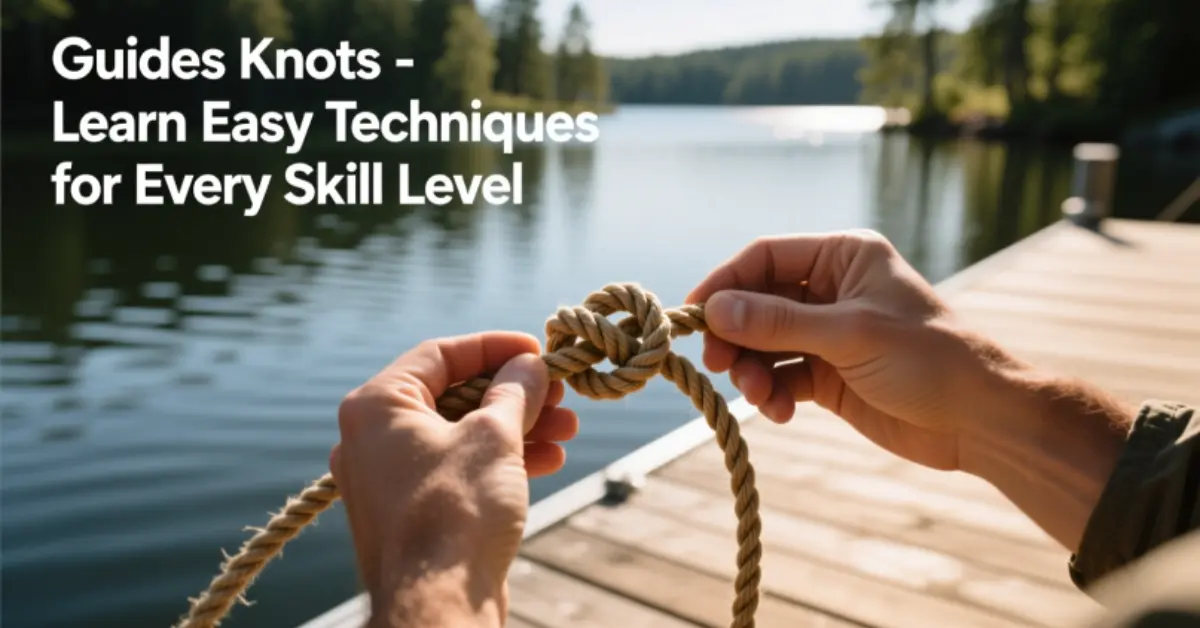
Guides knots are more than just loops and twists in a rope-they’re practical tools that help you solve real-world problems efficiently and safely. From securing your camping gear to organizing items at home, the right knot can make a task simpler and more reliable. Think of them as small but powerful skills that save you time, prevent accidents, and even give you a confidence boost when handling ropes or cords.
So why do they matter? Well, knots have been a part of human history for thousands of years-used in sailing, climbing, fishing, and countless everyday activities. Mastering a few basic knots doesn’t just make you “handy”; it’s about understanding how ropes behave under tension, how weight distributes, and how security can be maximized with simple techniques.
In everyday life, guides knots are surprisingly useful. For instance, when tying plants in your garden, a square knot can hold branches gently without damaging them. Setting up a tent? A taut-line hitch keeps lines tight even as the ground shifts. Even packing a bike or securing boxes in your car becomes less stressful when you know a few reliable knots. The beauty of guides knots is that they blend practicality with a skill that’s both timeless and empowering.
Table of Contents
The Basics: Why Learning Knots is Useful
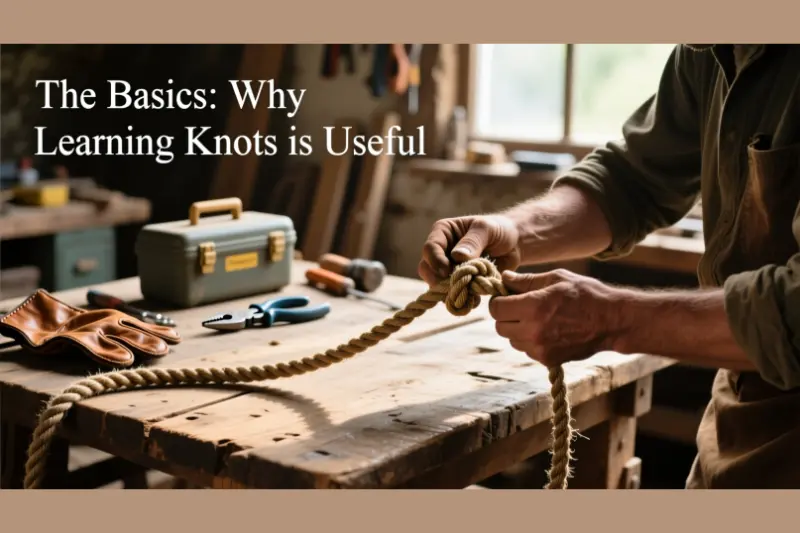
Learning guides knots isn’t just a quirky skill-it’s a practical ability that improves safety, organization, and efficiency in countless situations. Knowing which knot to use and how to tie it properly can prevent accidents, keep gear secure, and save you time. Imagine tugging on a rope that slips because you didn’t use the right knot-frustrating, right? A little knowledge goes a long way.
Safety first: Many knots are designed to hold under tension or sudden weight. For example, a bowline creates a strong loop that won’t slip, making it perfect for securing loads or even assisting in climbing or rescue scenarios. Using the correct knot reduces risks, whether you’re on a hike, in your backyard, or setting up a hammock between trees.
Organization and efficiency: Guides knots can keep your life tidier and more manageable. A square knot, for instance, bundles objects neatly, while a clove hitch quickly attaches items to poles or posts. Instead of wasting time fumbling with ropes or cords, a well-tied knot gives you order and control.
Real-life examples:
- Camping: A taut-line hitch adjusts tent lines easily, keeping your shelter stable even on windy nights.
- Home: Tying a bundle of newspapers or securing a garden trellis becomes hassle-free.
- Outdoor activities: Boating, fishing, or hiking often demand quick, reliable knots-knowing a few essentials can prevent gear loss or accidents.
Even if you don’t consider yourself “outdoorsy,” the skills you gain from practicing guides knots are surprisingly transferable. They teach problem-solving, patience, and precision, all while giving you practical tools for everyday life.
May be you like it:
Top Jobs for Women in Tech – Careers That Empower
AI Tools for Lit Review – Streamline Your Research Fast
The Teacher’s Guide – Tips, Tools & Strategies for Success
Software Testing Review – Tools, Tips & Best Practices
Beginner-Friendly Knots Everyone Should Know
If you’re just starting with guides knots, it’s best to focus on a few versatile knots that cover most everyday needs. Mastering these basics gives you confidence and makes it easier to learn more advanced techniques later.
Bowline Knot
The bowline is often called the “king of knots” because it creates a secure loop that won’t slip, yet it’s easy to untie even after bearing weight.
How to tie it:
- Make a small loop near the rope’s end.
- Pass the working end through the loop from underneath.
- Wrap it around the standing rope.
- Bring it back through the loop and tighten.
Use case: Securing a hammock, tying a boat to a dock, or creating a loop for rescue situations.
Square Knot (Reef Knot)
The square knot is perfect for joining two ropes of similar thickness. It’s simple, quick, and useful for light-duty bundling.
How to tie it:
- Cross the right end over the left and tuck it under.
- Cross the left end over the right and tuck it under.
- Pull both ends to tighten.
Use case: Bundling newspapers, tying packages, or securing lightweight gear.
Clove Hitch
The clove hitch is an adjustable knot that’s excellent for temporarily securing a rope to a post or tree. It’s quick to tie and untie, making it very handy outdoors.
How to tie it:
- Wrap the rope around the post.
- Cross it over itself and wrap it around again.
- Slip the end under the last wrap and pull tight.
Use case: Hanging a lantern from a tree branch, securing a tarp, or fastening items to poles.
Taut-Line Hitch
The taut-line hitch is an adjustable knot used for tensioning ropes. It’s especially useful for camping or situations where lines need to stay tight but adjustable.
How to tie it:
- Wrap the rope around a stable object.
- Make two turns around the standing part of the rope.
- Slide the knot to adjust tension as needed.
Use case: Tent guy lines, securing tarps, or adjusting clotheslines.
Mini Tip: When practicing, try using different rope types or thicknesses. You’ll notice how flexibility and grip change how the knot behaves-this insight is invaluable for real-life applications.
Advanced Knots for Outdoor and Specialized Activities
Once you’ve mastered the basics, it’s time to explore more advanced guides knots. These knots are designed for specific situations where strength, reliability, and versatility are critical. They’re commonly used in climbing, sailing, rescue operations, and other specialized activities-but even casual outdoor enthusiasts can benefit from knowing them.
Figure Eight Knot
The figure eight knot is strong, secure, and easy to inspect, making it a favorite among climbers and sailors. Unlike simpler knots, it won’t easily slip under load and is straightforward to untie afterward.
Use case: Creating anchor points for climbing ropes or securing gear to a fixed point.
Practical insight: When you’re dealing with height or weight, this knot’s reliability can literally be life-saving.
Sheet Bend
The sheet bend joins two ropes of different thicknesses securely-a task where many beginner knots fail. Its design prevents slippage even when one rope is thin or slick.
Use case: Extending a rope when you don’t have a single long line, or tying a lightweight rope to a sturdier one.
Practical insight: This knot is especially handy in boating or camping, where rope lengths and materials vary.
Double Fisherman’s Knot
This knot is perfect for tying two ropes together in high-stress situations. It’s strong, compact, and widely used in mountaineering and rescue scenarios.
Use case: Rappelling, creating rope loops, or connecting climbing ropes securely.
Practical insight: While it takes a bit more time to tie correctly, the security it offers is unmatched-making it ideal for critical situations.
Why advanced knots matter:
Advanced knots differ from beginner knots because they’re engineered for reliability under pressure, adaptability, and safety. While basic knots handle light-duty tasks, these advanced knots let you tackle higher-risk or technical scenarios with confidence. Knowing when and how to use them transforms rope handling from guesswork into skillful problem-solving.
Mini Reflection: Next time you’re hiking, camping, or boating, ask yourself: “Which knot would make this task safer or easier?” Practicing advanced knots gives you the flexibility to answer that question quickly-and act confidently.
Materials and Tools for Knot Learning
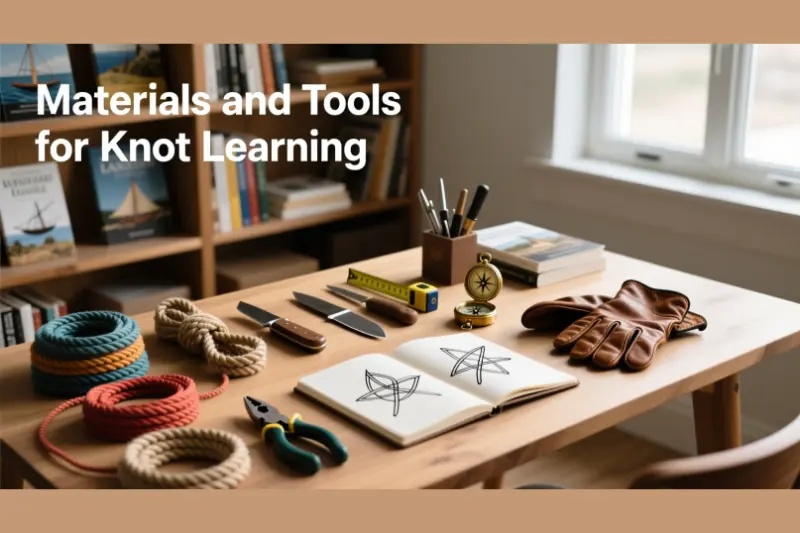
Before diving deeper into guides knots, it’s important to understand the materials you’re working with. The type, thickness, and flexibility of a rope can dramatically affect how a knot behaves, how strong it holds, and how easy it is to tie or untie.
Rope Types
Ropes come in a variety of materials-natural fibers like cotton or hemp, and synthetic options like nylon, polyester, or paracord. Each has unique characteristics:
- Natural ropes are soft and easy on the hands but may stretch or weaken when wet.
- Synthetic ropes are stronger, more durable, and often resistant to water and UV damage, making them ideal for outdoor activities.
Thickness and Flexibility
The thickness of a rope affects both grip and knot security. Thicker ropes are easier to handle and can hold more weight, but they may be harder to tie precise knots with. Thinner ropes are more flexible and easier to manipulate for small, detailed knots but may slip if not tied correctly. Flexibility also plays a role: a stiff rope might resist forming tight loops, while a highly flexible rope can be prone to slipping under tension.
How Rope Choice Affects Knot Strength
Not all knots perform equally on every rope. For example, a clove hitch may hold perfectly on a stiff climbing rope but slip on a slick, thin paracord. Similarly, the bowline is reliable on medium ropes but may require extra wraps on slippery or very soft ropes. Understanding your rope helps you anticipate how each knot will behave and ensures safety and efficiency.
Mini Tip: When practicing, try using different rope types and thicknesses. Feeling the differences in grip and tension gives you an intuitive sense of which knots work best in real-life scenarios. This kind of hands-on experience is what separates casual learning from true mastery.
May be you like it:
How to Write a Winning Resume for Lab Tech Roles
AI Rap Name Generator – Create Your Unique Stage Name
How to Tour Guide – Skills, Tips & Secrets for Great Tours
Top Software Therapy Reviews – Find the Best Tools Today
Step-by-Step Guides with Tips & Tricks
Once you’ve chosen your ropes and learned a few basic guides knots, the next step is practicing them effectively. Practice is where knowledge becomes skill, and even a few minutes a day can make a huge difference.
How to Practice Knots Effectively
- Start Small: Begin with a short piece of rope. It’s easier to manipulate and helps you focus on technique rather than managing a long rope.
- Repeat Until Comfortable: Tie the same knot multiple times in a row. Muscle memory is crucial-your fingers should start moving instinctively.
- Use Real-Life Scenarios: Try hanging a lightweight bag, securing a bundle, or setting up a mock tent line. Practicing in realistic situations helps you understand how knots behave under tension.
- Observe the Rope: Watch how the rope tightens and grips. Understanding the mechanics of each knot makes it easier to adjust for different ropes and tasks.
Common Mistakes and How to Avoid Them
- Tying Too Quickly: Rushing can lead to loose or unsafe knots. Take your time, especially when learning a new knot.
- Incorrect Loops or Wraps: Missing a step can compromise the knot. Use step-by-step diagrams or video tutorials to double-check.
- Not Testing the Knot: Always give your knot a gentle pull to ensure it’s secure before relying on it.
- Using the Wrong Knot for the Task: Each knot has a purpose. For instance, a square knot is great for bundling, but it shouldn’t be used for weight-bearing purposes.
Mini Insight: It’s normal for knots to slip or fail when you’re learning. Instead of getting frustrated, treat it as a learning opportunity. Examining why a knot didn’t hold helps you understand its mechanics and strengthens your skill.
Pro Tip: Keep a small rope kit handy at home. Practicing during short breaks-while watching TV or waiting for coffee-turns idle time into learning time. Over weeks, you’ll notice your hands moving faster and your knots holding stronger without thinking twice.
Practical Applications in Daily Life
One of the best things about guides knots is that they’re not just for adventurers or climbers-they’re surprisingly useful in everyday life. Once you start noticing, you’ll see knots popping up in all kinds of small, practical situations.
Gardening
Tying plants to stakes or creating trellises for climbing vegetables becomes much easier with a simple clove hitch or square knot. For example, a friend of mine struggled with tomato plants constantly falling over. Using a few taut-line hitches, she was able to secure each plant so that they could grow upright without damaging the stems.
Home Organization
Knots can help bundle cords, secure packages, or hang items neatly. Think of all the tangled extension cords in your closet-learning a simple bowline or square knot keeps them organized, tangle-free, and easy to grab when needed.
Securing Loads
Whether you’re strapping a bicycle to a car rack or securing a load in your truck, knowing the right knot prevents accidents. I once helped a neighbor transport firewood using paracord and a few square knots paired with taut-line hitches. Not a single piece shifted during the drive, and it saved us from a potential mess on the road.
Pets
Knots are handy even for pet owners. Making quick leashes, tie-outs, or secure harness attachments can be done safely with the right knot knowledge. For instance, a bowline loop can create a strong, non-slip attachment point for dogs during outdoor activities.
Mini Reflection: Everyday life is full of small challenges that ropes and knots can solve. By practicing guides knots, you’re not just learning a skill-you’re equipping yourself to handle these situations quickly, safely, and with confidence.
Safety and Testing Knots
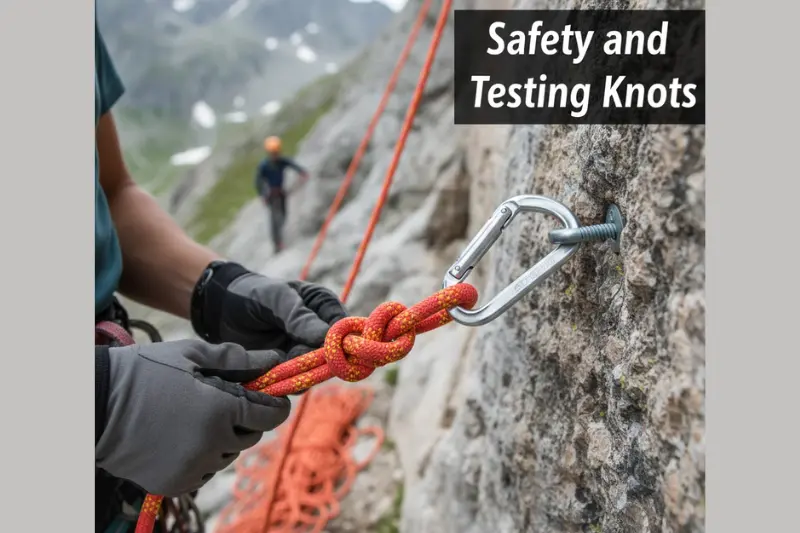
Learning guides knots is useful, but it’s just as important to know how to ensure they’re safe and reliable. A knot that slips or fails can lead to frustration at best-or injury at worst. Practicing knots is only half the battle; testing them properly is what makes them trustworthy.
How to Ensure Knots Hold Under Pressure
- Test with Weight: Before relying on a knot for a critical task, gently apply weight to see if it holds. For example, when securing a tent line, pull firmly on the rope to check tension and stability.
- Observe for Slippage: Some ropes, especially thin or synthetic ones, can slip even if tied correctly. Watch the rope closely under tension and adjust the knot or add extra wraps if necessary.
- Double-Check Loops: Knots like the bowline or figure-eight create loops that can sometimes loosen. Always ensure the loop is snug and properly seated.
Importance of Checking Knots Before Relying on Them
Even experienced knot users occasionally make mistakes. A small oversight-like a missed wrap or loose tail-can compromise the knot’s security. Checking knots every time prevents accidents and builds confidence. Think of it like seatbelts: you wouldn’t hop in a car without fastening them, so don’t rely on a knot without testing it first.
Mini Insight: Developing a habit of testing knots isn’t just safe-it’s also part of understanding how ropes behave. Over time, you’ll intuitively sense when a knot is secure and when it needs adjustment, making you a more skilled and confident practitioner.
Learning Techniques and Skill Building
Mastering guides knots isn’t something you do in a single afternoon. Like any hands-on skill, it improves with repetition, practice, and learning from mistakes. The good news is that even small, consistent efforts can make a noticeable difference.
Repetition and Hands-On Practice
The key to becoming comfortable with knots is repetition. Tie the same knot several times in a row, then try it in slightly different situations-different rope types, lengths, or tension levels. This builds muscle memory, so your fingers eventually “know” the knot without needing to think step by step.
Mini example: I used to struggle with the clove hitch when securing tarps for camping. After practicing it repeatedly on different poles and ropes, I could tie it quickly and adjust it confidently, even in windy conditions.
Learning from Errors
Mistakes are not failures-they’re opportunities. When a knot slips, loosens, or feels awkward, take a moment to figure out why. Did the rope type affect it? Did you miss a loop? Understanding the mechanics behind errors accelerates learning far more than perfect repetitions ever could.
Resources to Boost Your Skills
There’s a wealth of ways to learn and refine your knot skills:
- Video tutorials: Watching experts tie knots in real time helps you see the subtle hand movements and tension adjustments.
- Guides and books: Step-by-step illustrations and explanations are great for reference and practice.
- Community tips: Outdoor forums, climbing groups, and social media communities often share tricks and hacks you won’t find in books.
Reflective Tip: Set small challenges for yourself. For example, can you tie a bowline with one hand or a clove hitch on an unfamiliar object? These little exercises keep learning fun and practical, while steadily improving your confidence.
FAQs
What are guides knots?
Guides knots are practical rope-tying techniques used to secure, join, or adjust ropes safely and efficiently in everyday and outdoor situations.
Why should I learn guides knots?
They improve safety, organization, and problem-solving skills, and can make tasks like camping, gardening, or securing loads much easier.
Which knots should beginners start with?
Bowline, Square Knot, Clove Hitch, and Taut-Line Hitch are versatile and easy for beginners to learn.
How can I practice knots effectively?
Use hands-on practice, repeat knots regularly, test them under weight, and try different rope types to build muscle memory and confidence.
Do I need special ropes to learn guides knots?
No, you can start with any rope, but practicing with different thicknesses and materials helps you understand how knots behave in real situations.
Conclusion
Guides knots are more than just a set of techniques-they’re practical, versatile skills that make everyday tasks easier, safer, and more efficient. From simple home projects to outdoor adventures, knowing the right knot for the job saves time, prevents frustration, and even keeps you safe.
The true value of guides knots lies in their combination of practicality and empowerment. Every knot you learn adds a small but meaningful layer of confidence, problem-solving ability, and hands-on competence. Whether it’s tying a bundle, securing a tarp, or mastering a climbing rope, each skill you practice becomes part of your toolkit for life.
Keep experimenting, practicing, and learning from real situations. Try new knots, different rope types, and challenging scenarios. Even small daily applications-like gardening, organizing, or securing gear-are opportunities to reinforce your skills. Over time, these seemingly simple techniques transform into intuitive, reliable habits.
So grab a piece of rope, pick a knot, and start practicing. You’ll be surprised at how quickly these small, practical skills can make a big difference in your life-and maybe even turn you into the go-to “knot expert” among friends and family.
May be you like it:
Armour Tech Pavers – Durable & Stylish Outdoor Solutions
Top AI Tools Transforming Work in 2025
Fishing Guides Lake Conroe TX – Expert Tips & Local Trips
